1.A3.3 STABILITY
In this context, stability means ‘resistance to toppling’. An object with a narrow base and a high centre of gravity will need less force to topple it than one with a wide base and a low centre of gravity.
As the height of the centre of gravity increases relative to the width of the base, a point will be reached where the object will fall over unless it is supported by external means. At this point, the object is regarded as being unstable and the greater the support required the more unstable it is. A similar situation exists with a suspended load. Forces which try to topple the load will inevitably be present (e.g. wind, acceleration, braking).
It is essential, therefore, when slinging a load to ensure that it is sufficiently stable to resist these toppling forces. A load will be inherently stable if the lifting sling is attached ABOVE the centre of gravity and properly disposed around it.
Where the sling is attached below the centre of gravity, the degree of stability will depend on two relationships: firstly, the ratio of b/h; and secondly the ratio of α/β (See Figure 1.A3.3-1 )
The larger these ratios, the more stable the load. It will be noted that decreasing dimension ‘h’ has the effect of increasing both ratios at the same time and this is the most desirable solution if practicable.
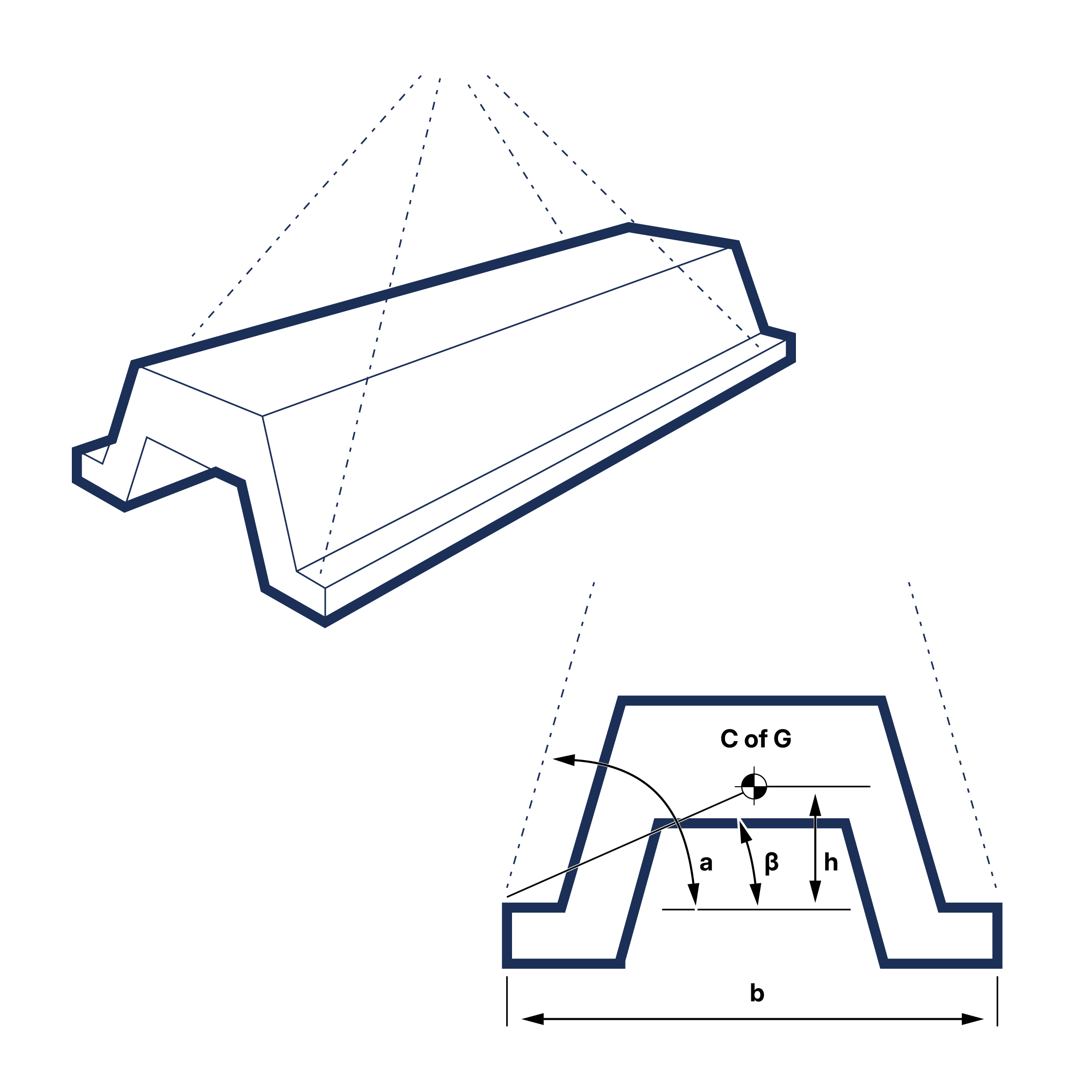
Figure 1.A3.3-1
Particular care must be taken when lifting loads from below the centre of gravity using a lifting beam. (See Figure 1.A3.3-2 )
Such an arrangement is often employed where headroom is restricted. It should be recognised however that if dimension Y is equal to or greater than dimension X, then the system WILL BE INHERENTLY UNSTABLE AND DANGEROUS.
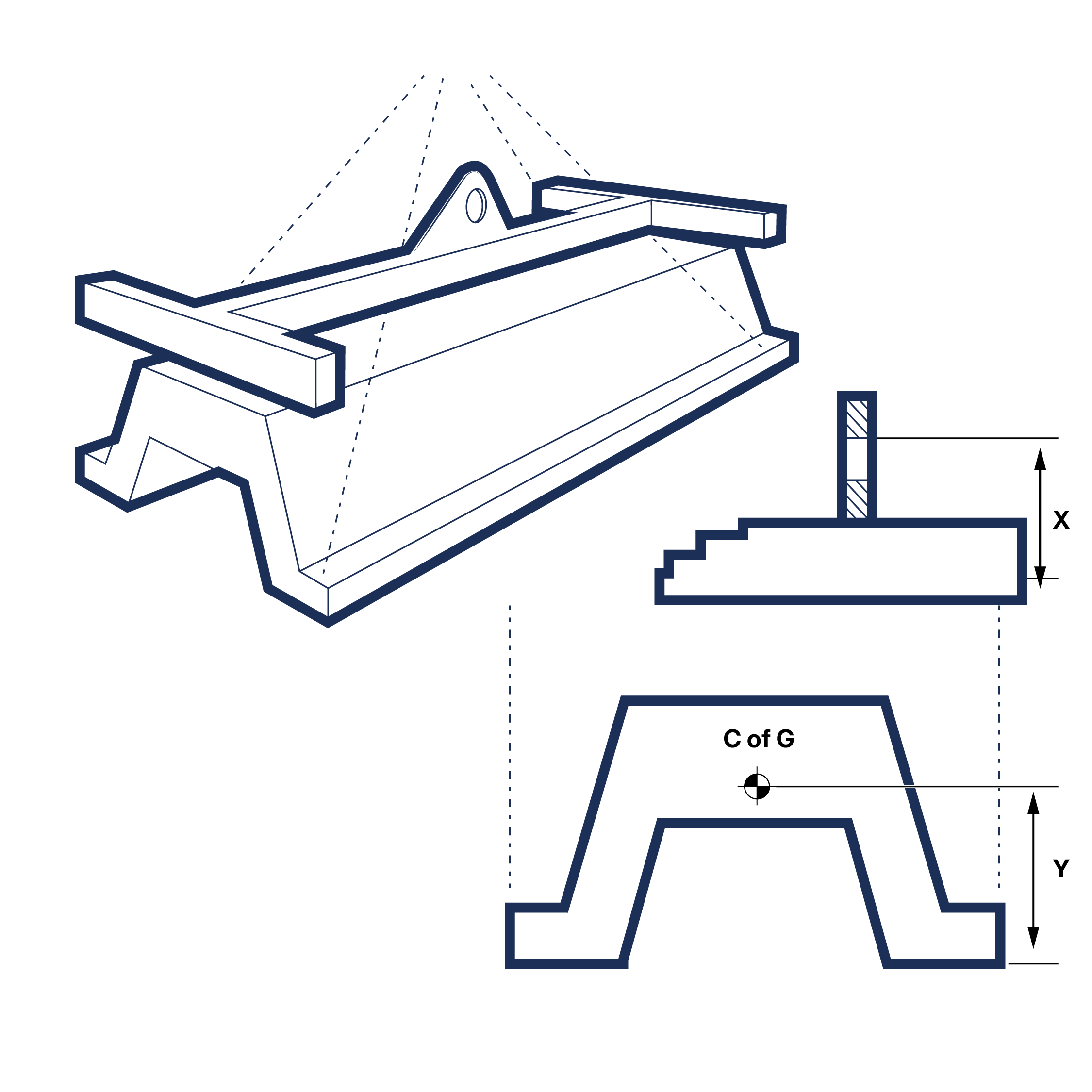
Figure 1.A3.3-2
Where it is intended to ‘turn over’ the load when in the air or position it at an inclined attitude, special consideration should be given to the questions of balance and stability to ensure that at all stages of the operation the load remains balanced, stable and securely attached without overloading any item of lifting equipment.
On occasions, particularly when using a single leg sling, it may be necessary to lift a load such as a pipe or drum with the sling positioned a short distance away from the centre of gravity. The load when lifted will then take up a tilted position but will be inherently stable.