19.10 SAFE USE OF SHACKLES
In addition to any specific instructions relating to the safe use of the shackle issued by the manufacturer, the following should be observed:
Select the correct type and capacity of shackle for the particular application, taking account of the information given in section 19.4 TYPES OF SHACKLE.
Before use check that the body of the shackle and the pin are both identifiable as being of the same quality grade. Typical grade markings are 4, 04, 06, 8, M, S, T. Alloy steel shackle pins to some standards can readily be identified by flats on the side of the pin collar or head.
Ensure, where appropriate, that the pin is correctly screwed into the shackle eye, i.e. tighten finger tight, then lock using a small tommy bar so that the collar of the pin is seated on the shackle eye. Ensure that the pin is of the correct length so that it penetrates the full depth of the screwed eye and allows the collar of the pin to bed on the surface of the drilled eye.
If the pin does not seat correctly it may be bent, the thread may be too tight or the pin holes out of alignment. Do not use the shackle but refer to a Competent Person.
Never replace a shackle pin with a bolt, other than one designed for the purpose, as it may not be suitable for the loads imposed. (See Figure 19.10-1 )
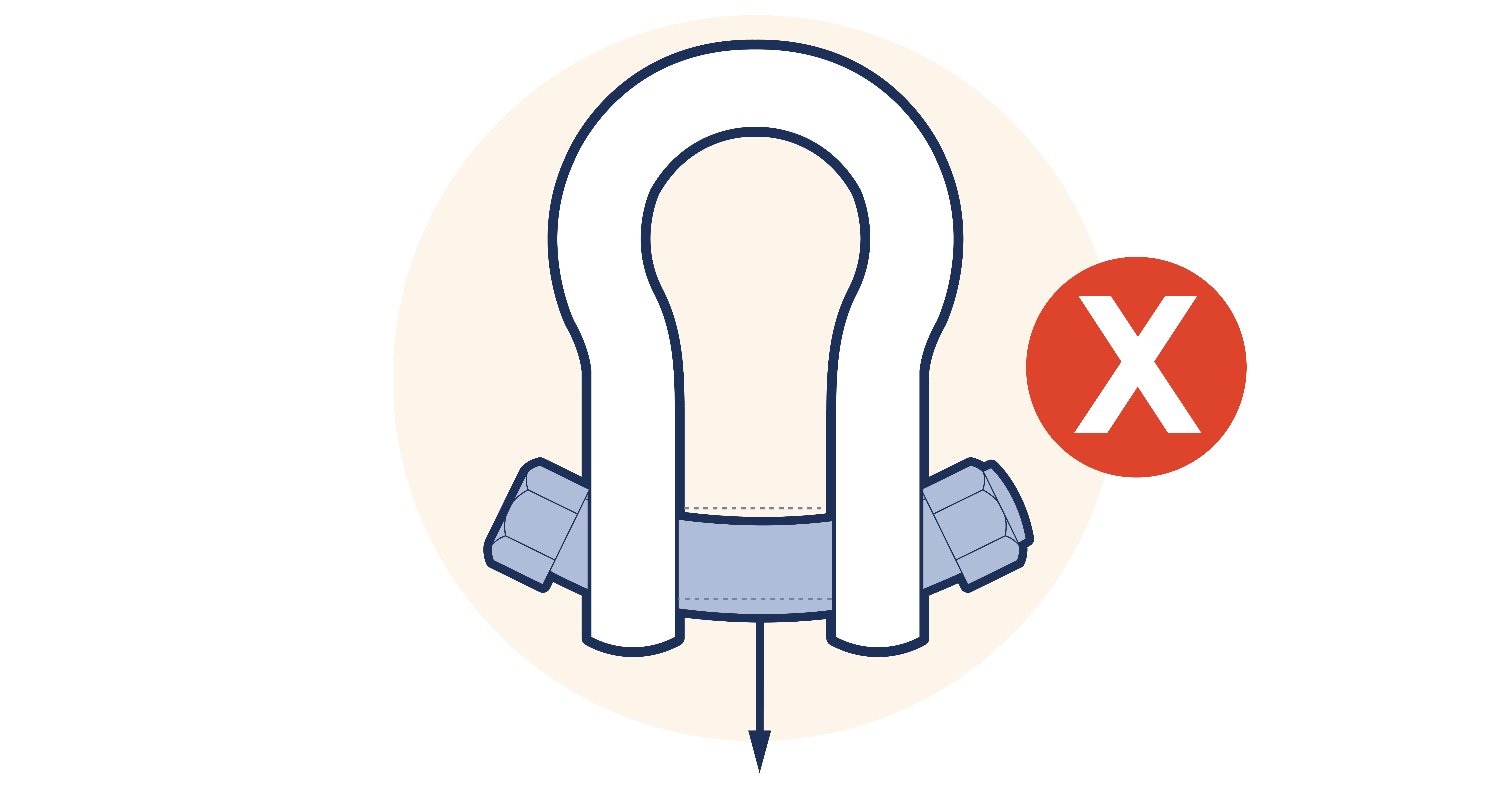
Figure 19.10-1 Never replace a shackle pin with a bolt. The load will bend the bolt.
It is preferable, in the case of shackles fitted with a bolt and nut pin, that the length of the plain portion of the bolt is such that the nut will jam on the inner end of the thread and not on the eyes of the shackle, thus leaving the bolt free to rotate.
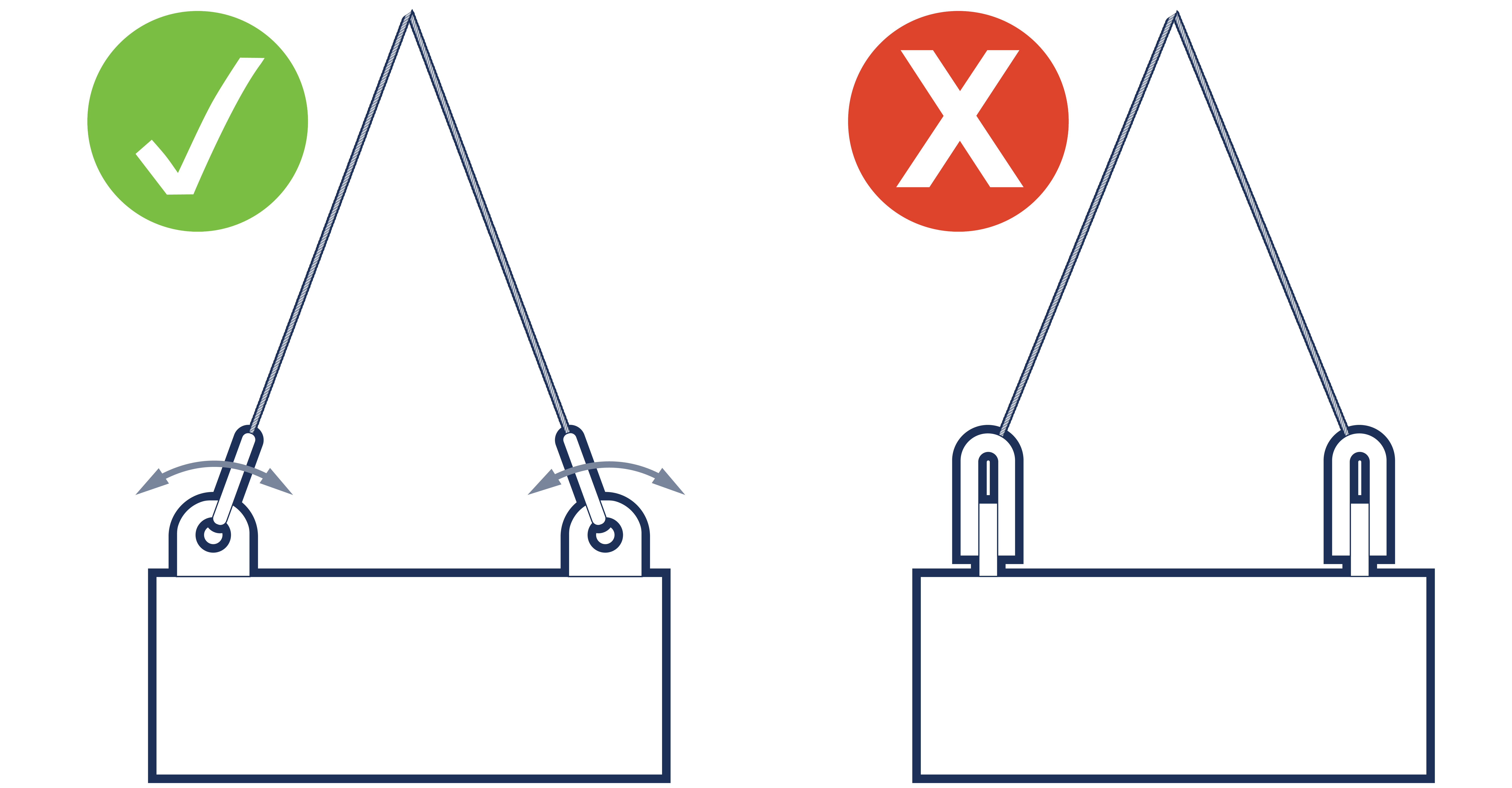
Shackles should be fitted to the load in a manner that allows the shackle body to take the load in a true line along its centre line; and not in such a way that bending loads are induced, other than those for which the shackle is designed. (See Figure 1) When using shackles in conjunction with multi-leg slings, due consideration must be given to the effect of the angle at which the legs of the sling are disposed to the vertical. As the angle increases, so does the load in the sling leg and consequently in any shackle attached to that leg.
 Note
NoteSome shackle manufacturers have designed and verified shackles to take a side loading with a reduction in the WLL. Unless specific manufacturers instructions are provided, then it shall be assumed that they cannot be loaded in this manner.
To avoid eccentric loading of the shackle, a loose spacer may be used on either end of the shackle pin (See Figure 19.10-3 ) or a shackle with a smaller jaw width should be used. Do not reduce the width between the shackle jaws by welding washers or spacers to the inside faces of the eyes or by closing the jaws, as this will have an adverse effect on the properties of the shackle. Narrow jaw shackles can normally be obtained from a LEEA member if required.
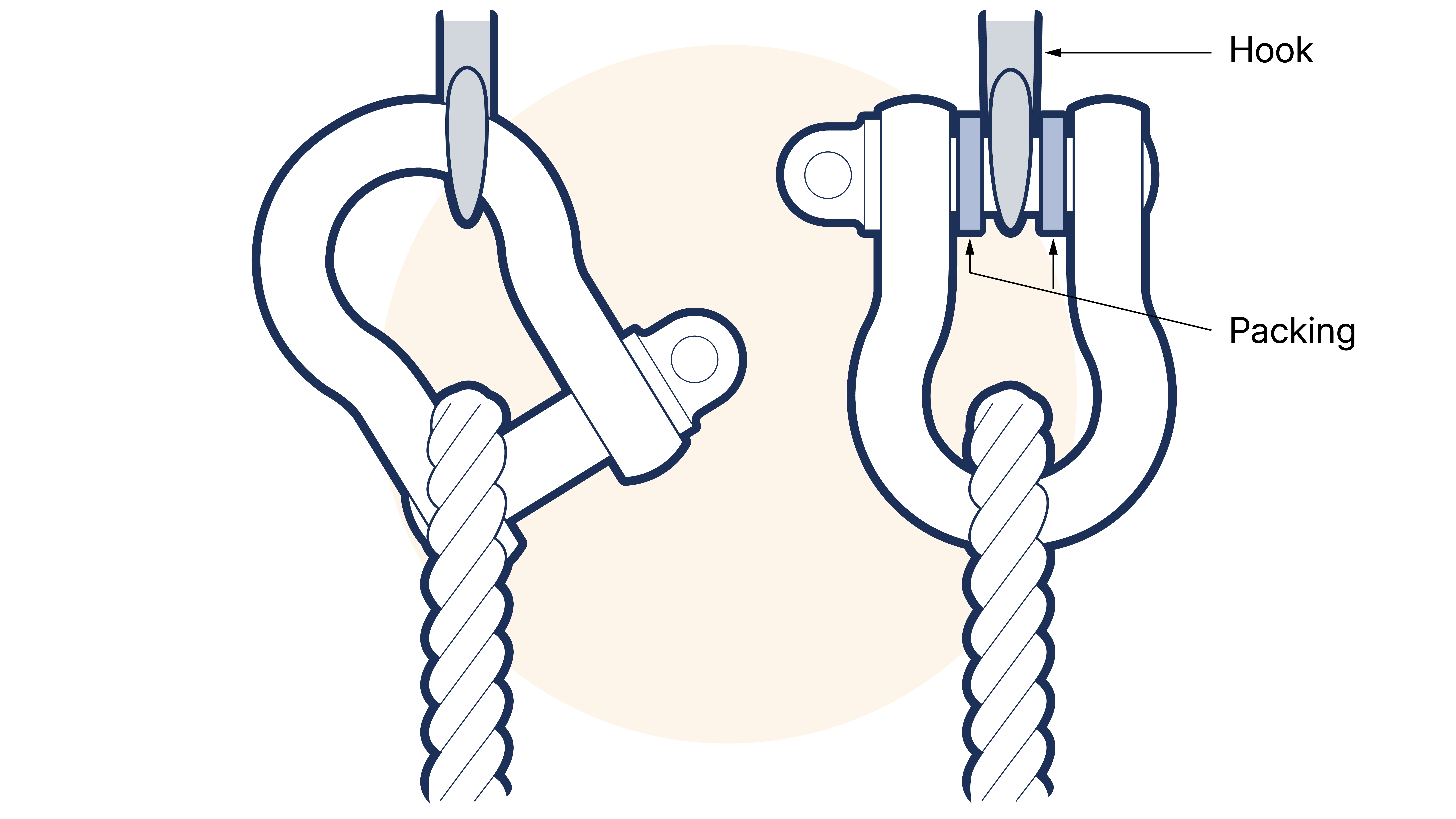
Figure 19.10-3
When a shackle is used to secure the top block of a set of rope blocks, the load on this shackle is increased by the value of the hoisting effort. (See section 1, 1.A4 APPENDIX 4 - STRUCTURES).
Avoid applications where, due to movement of the load or rope, the shackle pin can roll and possibly unscrew. (See Figure 19.10-4 and Figure 19.10-5 )
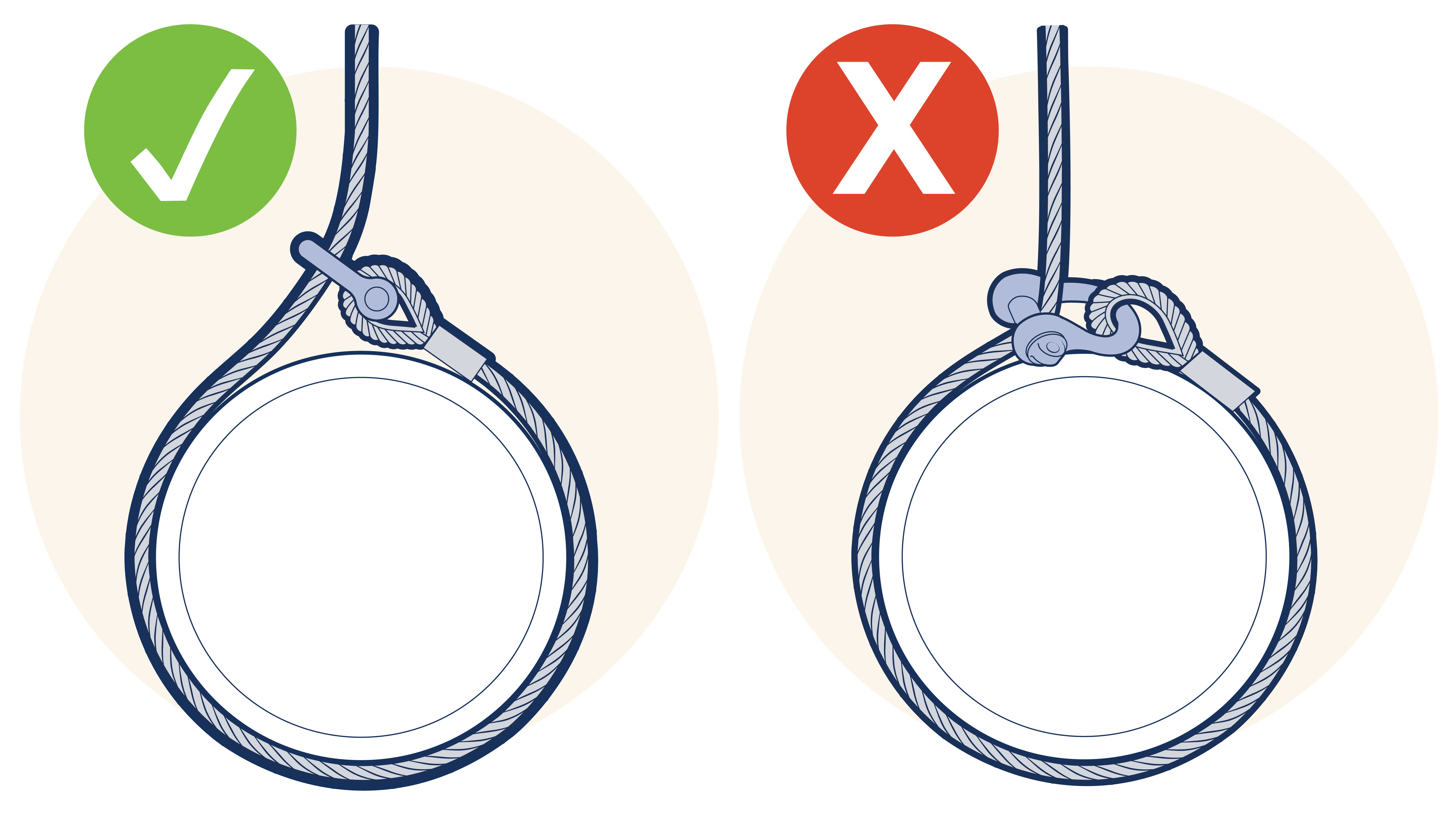
Figure 19.10-4 Correct - shackle pin cannot turn. Incorrect - shackle pin bearing on running line can work loose.
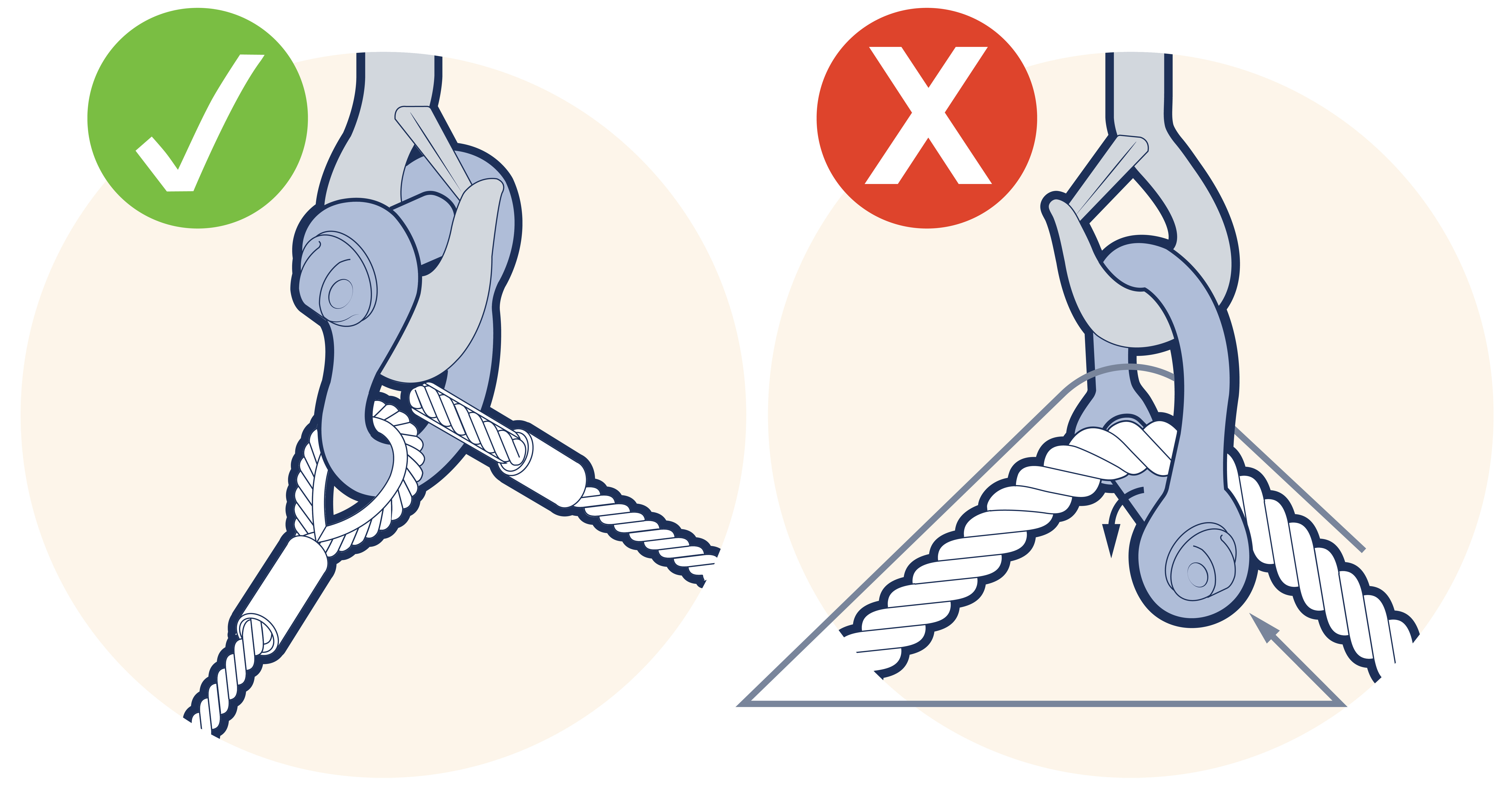
Figure 19.10-5 Correct - use two ropes with eyes. Incorrect - if the load shifts, the sling will unscrew the shackle pin.