3.11 SAFE USE OF HAND OPERATED CHAIN HOISTS
In addition to any specific instructions relating to the safe use of the hoist issued by the manufacturer, the following points should be observed:
The hoist must not be used to raise, lower or suspend a load that is in excess of the SWL marked upon the hoist.
Do not use the load chain to form a sling, i.e. it must not be wrapped around the load and back hooked, snickled or choke hitched. (See Figure 3.11-1 ) This is because doing so will mean that there is no longer a swivel between the load and the hoist and in addition the forces on the links at the point of choke may affect the calibration of the chain.
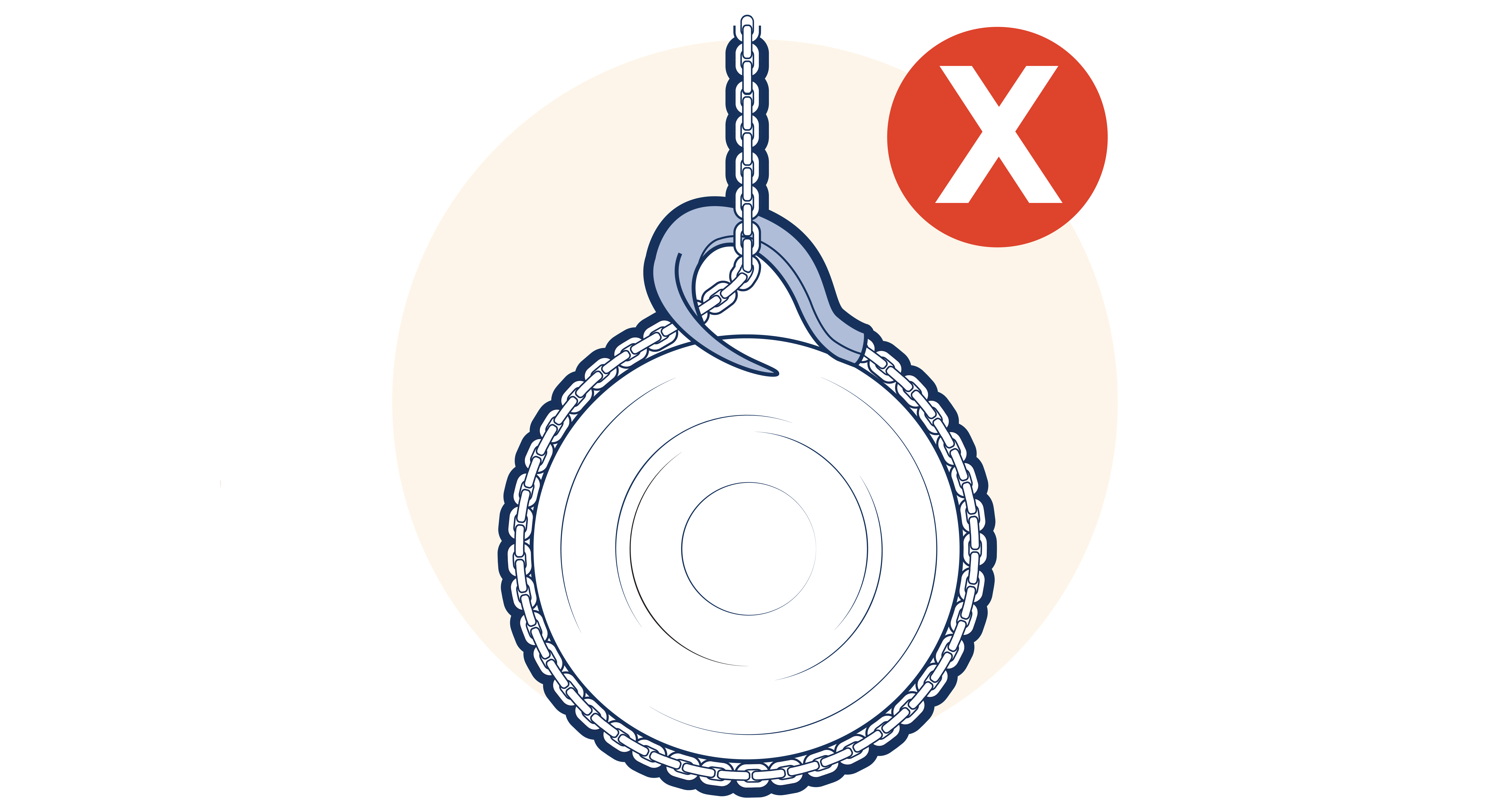
Figure 3.11-1 Never hook a load chain like this
The bottom hook should be attached to the load such that no part of the load is in contact with the point of the hook. (See Figure 3.11-2 )
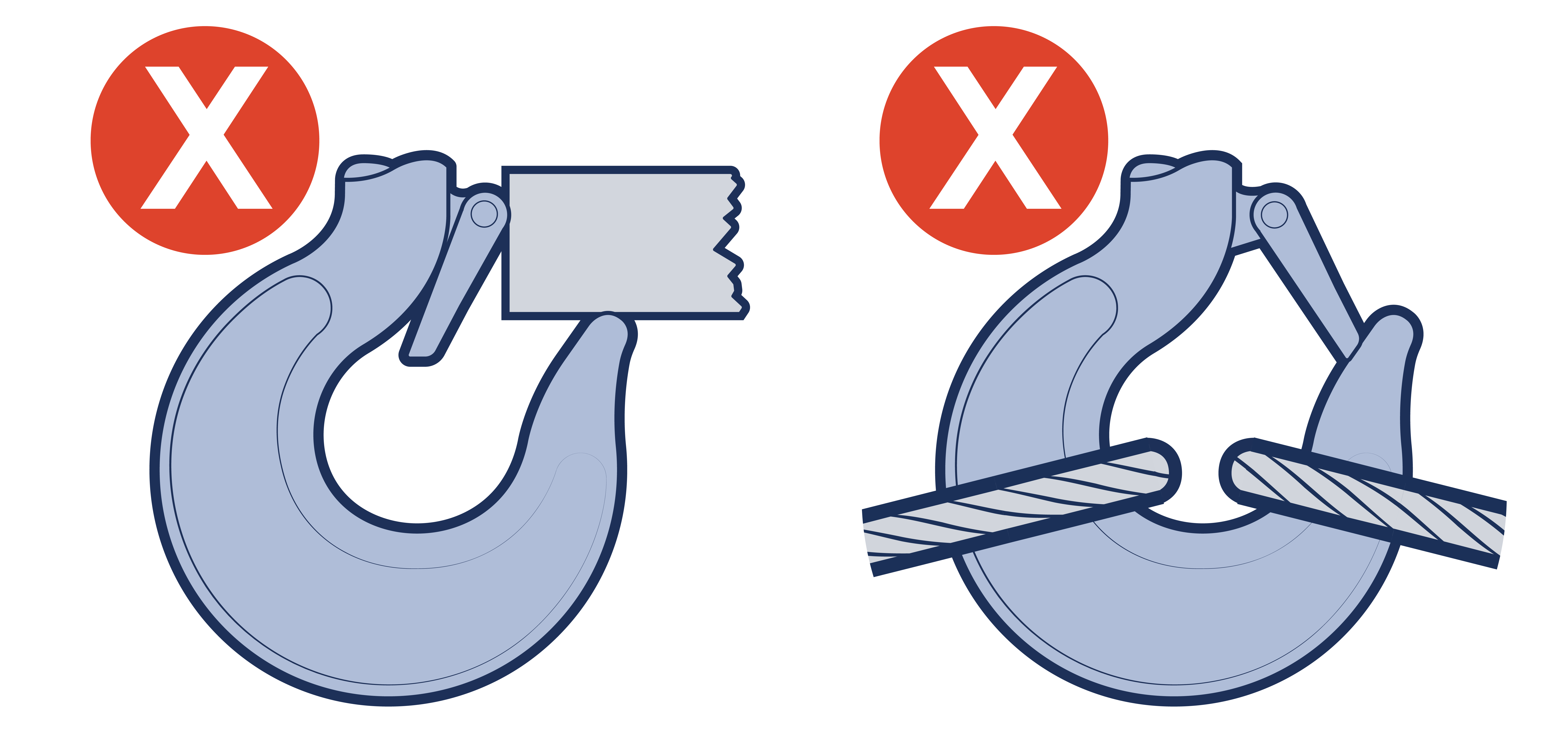
Figure 3.11-2 Never load a hook in this manner, unless permitted and within the limitations instructed by the hoist manufacturer. Always ensure the load is applied through the saddle of the hook.
The bottom hook should not be crowded with the terminal fittings of slings. To prevent the hook becoming overcrowded, LEEA recommends that the upper ends of the sling legs are connected by means of a shackle or link of adequate strength. (See Figure 3.11-3 )
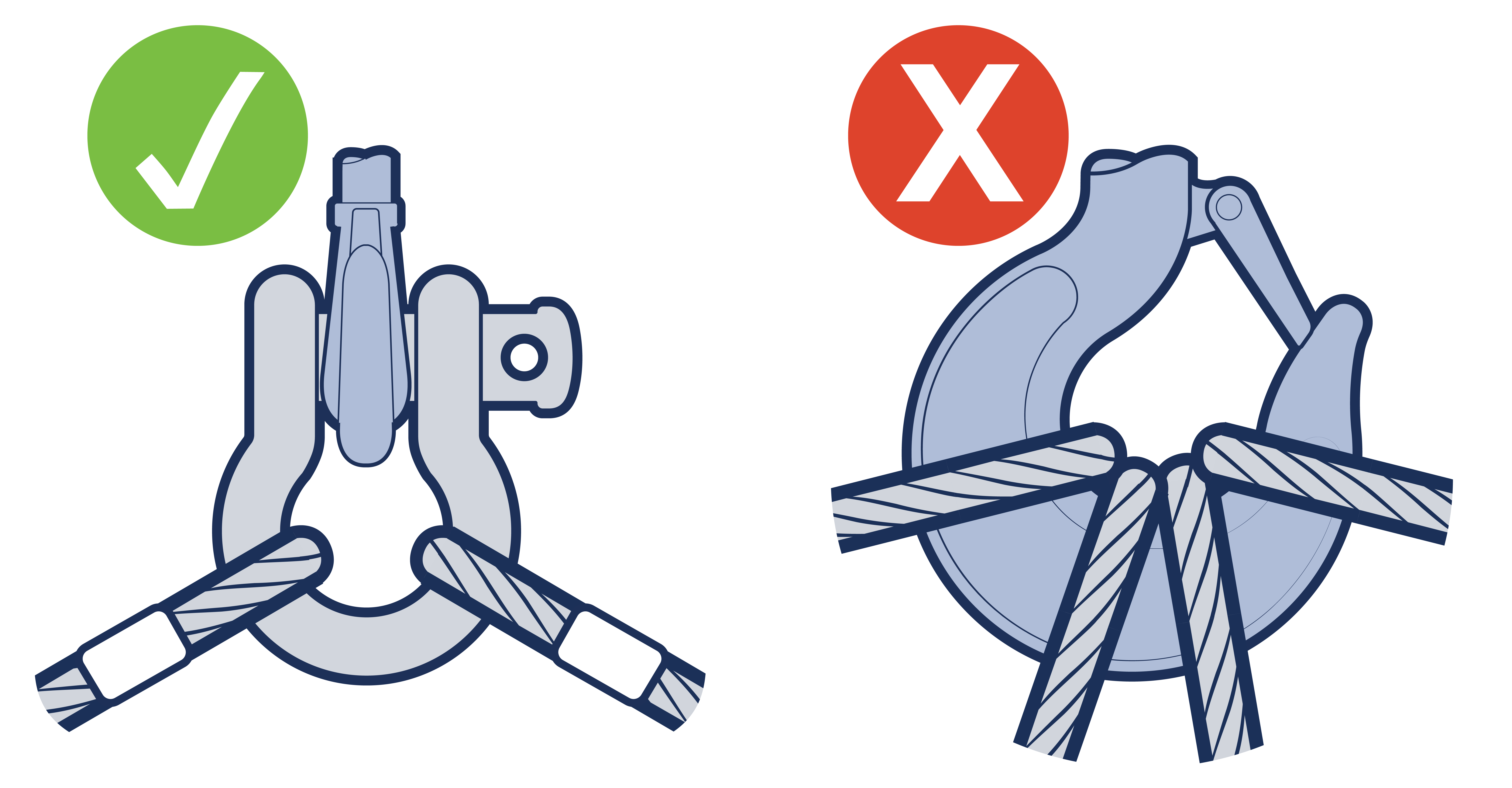
Figure 3.11-3 The right way! To attach two or more slings to the hook use a shackle and The wrong way! Overcrowding the hook is dangerous
It should be borne in mind that the majority of hoists, and especially the lower capacity models, are designed for operation by one person only. If it is found that more than one person is required, it is probable that either: (a) the load exceeds the SWL of the appliance; or (b) the appliance is in need of maintenance; or (c) a combination of (a) and (b) exists. Whichever may be the case, an unduly high operating effort requires investigation before the lift proceeds. This is not intended to preclude the use of two persons to operate the hoist which may in certain applications be found advantageous but is to indicate the degree of operating effort normally required. For larger capacity appliances, the manufacturer will advise on the number of persons normally required to lift maximum capacity.
Care should be taken to ensure that the hoist is not subjected to shock loading.
Hoists should not be used in a position where they are liable to be subjected to adverse conditions unless written approval is given by the manufacturer.
Loads should not be left suspended from hoists for any length of time unless absolutely essential and a safe system or work and/or additional safety measures are provided to reduce the risk to an acceptable minimum. Where it is as a result of a breakdown, the operative should ensure that the danger area beneath the load is cordoned off to prevent personnel from being at a risk in the event of a descending load. At no time should the operative permit either himself or other personnel to be beneath or on a suspended load.
When a hoist is suspended from a crane to facilitate accurate positioning of the load, special precautions should be taken as follows:
The manufacturer has confirmed that the hoist has been design for use in such applications.
For use with power operated cranes the SWL of the hoist should be reduced by 15% to allow for the higher dynamic loading.
Before hoisting the load with the crane, a short lift should be made with the hand chain hoist to ensure that the brake is locked.
When a hoist is to be used at an angle to the vertical, special precautions should be taken as follows:
Only a hook suspended hoist should be used.
The suspension point must be suitable for the line of force and of adequate strength.
The hoist must be free to align between the seats of the top and bottom hooks.
It must be possible to operate the hand chain safely when the hoist is at the required angle(s).
The maximum force on the hoist must be calculated by someone competent for the purpose taking account of the angle(s) and must not exceed the rated capacity.
For high lifts, hoists can be used in series provided that the weight of the lower hoists is taken into account when assessing the SWL required for the hoists above.
Portable hoists (i.e. a hoist that is not regularly suspended from a runway, crane, etc.) should, when no longer required for use, be returned to proper storage.
Care should be taken not to drop a hoist. Any appliance which is accidentally subjected to this treatment should be checked by a Competent Person before further use.