3.9.2 Storage and Handling
When not in use, portable hoists should be returned to proper storage. It is recommended that hoists be suspended by their top hooks with both load chain and hand chain clear of the ground in order to prevent accidental damage. The general requirements are as recommended in section 1.7.2 Storage and Handlingof this code, i.e. the storage area should be dry, free from injurious pollution and extremes of temperature, together with the following:
Equipment which is returned to stores wet and/or dirty should be cleaned and dried. Powerful solvents or cleaning agents should not be used, neither should direct heat. Exposed surfaces liable to corrosion should be suitably protected before going into storage.
In the case of multi-fall hoists, care should be taken during handling to ensure that the bottom block is not turned over within the falls as this will impart a twist to the load chain.
A suitable method of wrapping the load and hand chains is depicted in Figure 3.9.2-1 . The bottom hook or block should be raised to within 350-500 mm (12-18 inches) of its highest position according to the length of chain fitted. (The lower dimension for short lift hoists, the higher dimension for high lift hoists). The slack end loop of load chain should first be wound around the remaining load chain between the hoist body and the bottom hook, followed by the hand chain loop, the ends being secured with suitable twine or wire. Wrapped in this way the hoist is a compact unit for storage or transportation purposes.
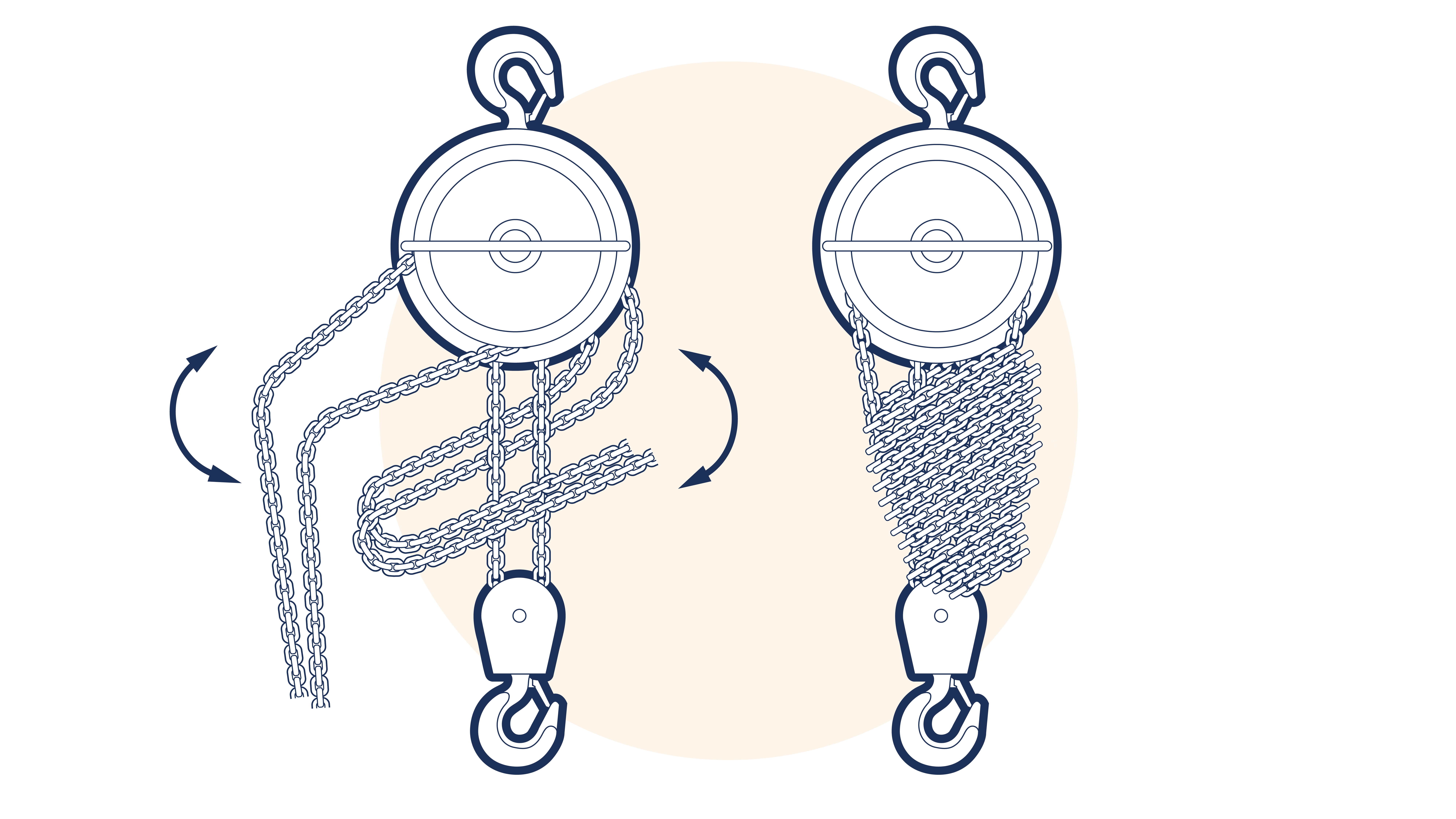
Figure 3.9.2-1 (1) Raise the bottom hook (2) Wrap the load chain (3) Wrap the hand chain (4) Securethe ends
When a hoist has been in storage for any length of time, it should be checked by a Competent Person to ensure that the brake is operating correctly before it is put back into service.
When being handled, hoists should not be dropped or thrown down and when transported, the chains and hooks should not be dragged across the floor surface.
Non-portable hoists used for outdoor applications should be protected from the elements by a suitable protective cover. In addition, steps should be taken to protect the chains from corrosion. It must be stressed, however, that chains and other load bearing parts of the hoist should NEVER be subjected to galvanising or plating processes without the EXPRESS APPROVAL of the manufacturer.