10.4.2 Free Standing
In the case of free-standing jib cranes, the jib arm and supporting column are assembled as a single unit which includes all mountings and bracing. They may be either over-braced or underbraced in design dependent on the intended use and the location of the installation. The supporting column is usually manufactured from square box section, fabricated sections or tube dependent on the required angle of slew. The angle of slew and intended use will also affect the design of the king post and mounting structure.
Free standing jibs are available with a wide variety of slewing angles. They may have a full 360° angle of slew, allowing for continuous rotation if a tubular column is used, or be limited to 270° angle of slew if a square box or similar section column is used. Stops may be fitted to limit the angle of slew at any position within the arc of travel. Where continuous jib rotation is required and electrically operated hoists are to be used, slip ring units are incorporated so that there is no limitation in rotation from the power pick-up. If pneumatic hoists are to be used, the air supply may be piped through the centre of the column and passed along the jib arm via a flexible hose. In this case, slewing stops are necessary to limit the rotation, thus preventing damage to the hose or the loosening of couplings. A similar arrangement may also be used with certain flexible cable electrical supplies.
Two options exist for the foundations of fixing free standing jib cranes. They may be surface mounted; in which case the base of the column is fitted with a base plate drilled to accept anchor bolts. Alternatively, they may be cast into the foundation, in which case the column is extended by a suitable amount to withstand the turning moment imposed. (See Figure 10.4.2-1 )
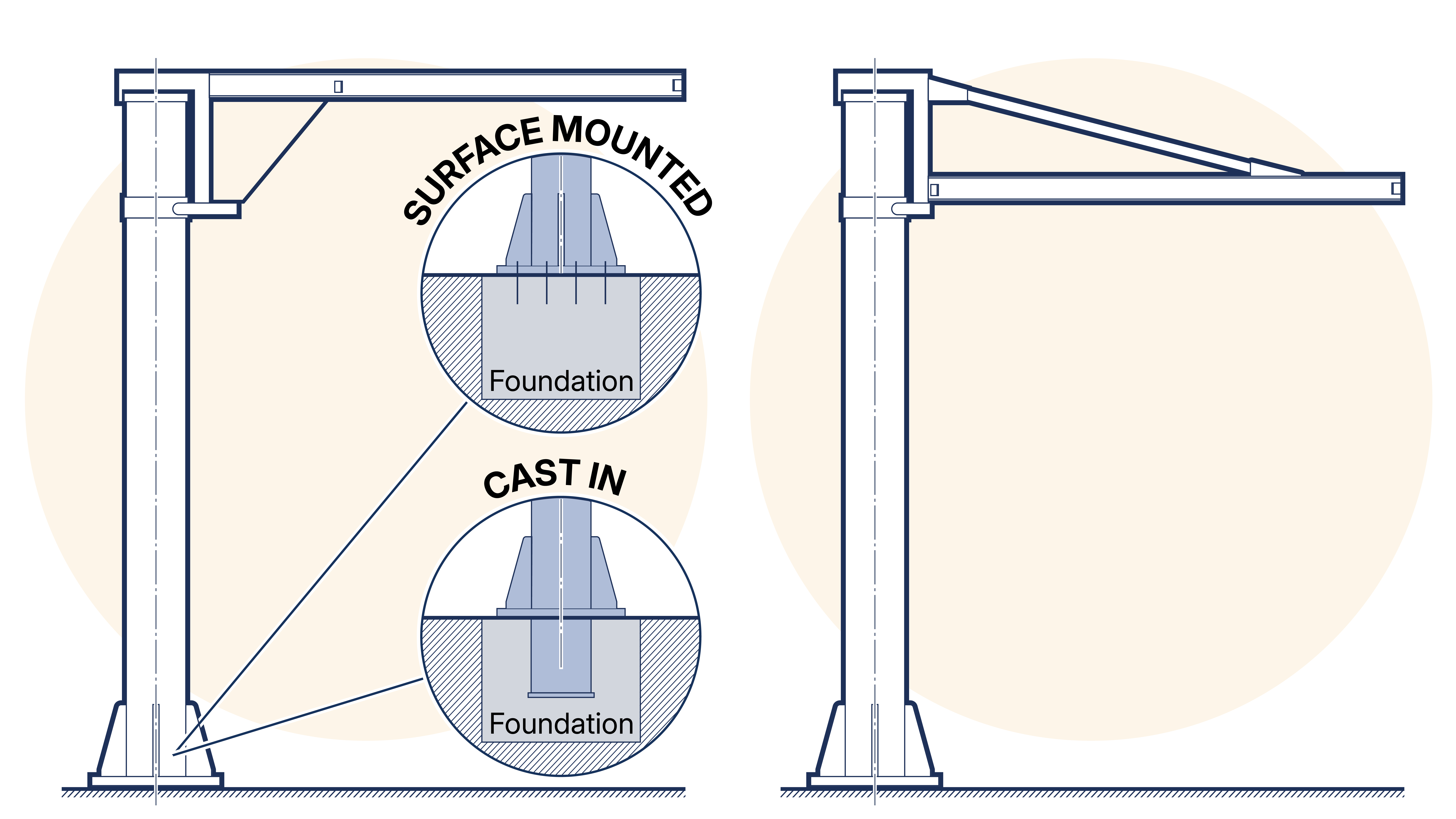
Figure 10.4.2-1 Free standing jib cranes