22.4.1 Type (1) - Clamps Lifting From the Edge of the Plate by Friction
There are three main principles of operation in use:
Those in which a system of levers actuated by the loading of the lifting eye or chain, or in which a chain or wire rope is attached to the jaws in such a way as to produce a force causing the jaws to come together and grip the plate. (See Figure 22.4.1-1 ) Such gripping action may be provided by the lever system itself, or by a combination of the leverage and the cam action of the jaw. Clamps which are provided with a spring loaded locking device which secures (locks) the clamp onto the plate without a force being applied to the lifting eye are preferred. Some clamps are capable of lifting plates from the horizontal to the vertical and vice versa but some will only maintain their grip away from the vertical one way around and so can only be used to turn a plate over if the plate is first lifted to the vertical, then temporarily supported whilst the clamp is removed and turned around prior to the plate being lowered. Those which retain their grip throughout the whole manoeuvre are preferred and users are reminded of their obligations to provide safe systems of work. It is unlikely that such equipment will meet these requirements. In addition some clamps have the further advantage of being able to accommodate a lifting load applied at any angle to the side plate of the clamp. The working load limit of such clamps is usually reduced by a stated percentage (e.g. 50%) when so used. Confirmation should be sought from the manufacturer’s instructions on the performance of their clamps.
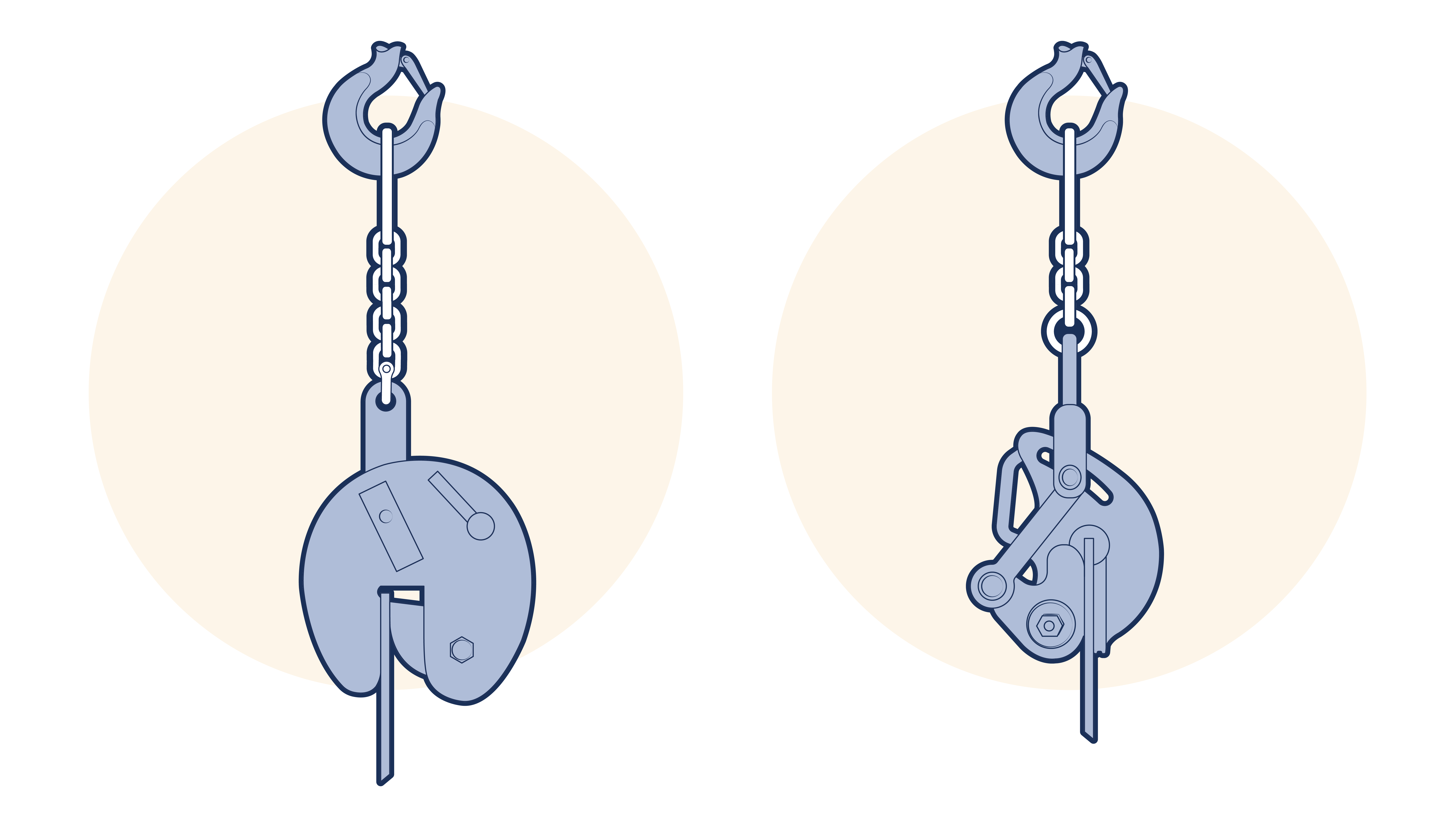
Figure 22.4.1-1
Clamps which grip by the action of a wedge or cams but without lever action. (See Figure 22.4.1-2 a)
Those in which the gripping force is provided by a screw tightened by a bar or spanner. (See Figure 22.4.1-2 b) It is emphasised that such clamps are purpose designed items and ordinary ‘G’ clamps are NOT suitable. In addition, special precautions are required in use.
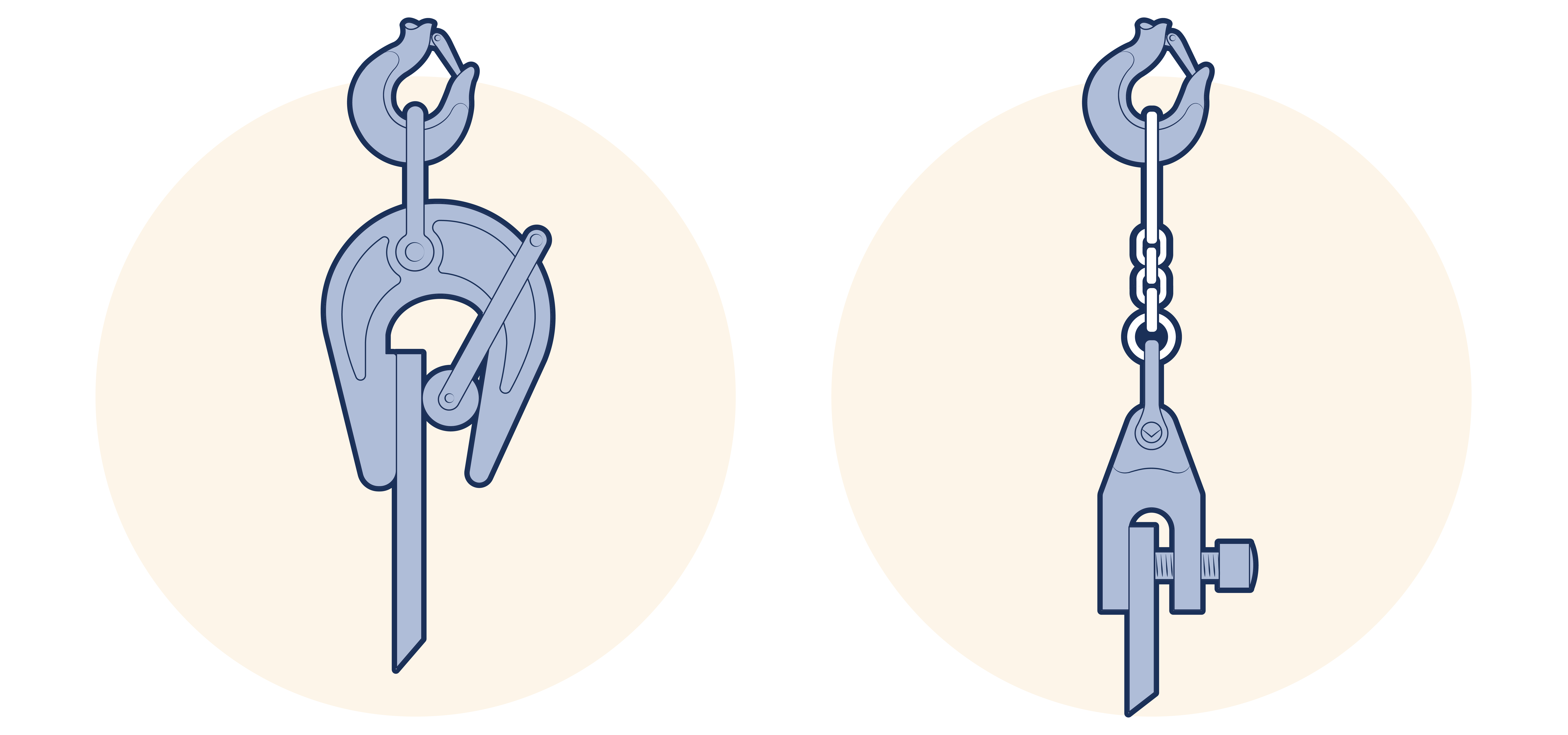
Figure 22.4.1-2