8.11 SAFE USE OF GIRDER TROLLEYS
In addition to any specific instructions relating to the safe use of the trolley issued by the manufacturer, the following points should be observed:
The trolley must not be used to suspend a total load that is in excess of the SWL marked on the trolley.
Care should be taken to ensure that the trolley is not subjected to shock loading, e.g. vertically by misuse of the lifting appliance or horizontally by side loading or running into the end stops of the runway.
It is essential to note that trolleys are suitable for ‘in line’ use only and either the load or the trolley must be moved to achieve this, i.e. the line of force must be at right angles to the flange of the runway to which it is fitted (See Figure 8.11-1 ). If the load is applied at an angle to the longitudinal axis of the runway the trolley will move along the runway until the line of force is vertical. If the load is applied at an angle to the transverse axis, the load will be transferred onto the wheels and the beam flange on one side of the runway. It is possible to pull a trolley off the runway by loading in this manner. Thus, if the load to be lifted cannot be positioned directly under the runway, some other method of lifting must be devised, i.e. use a moving runway such as a jib.
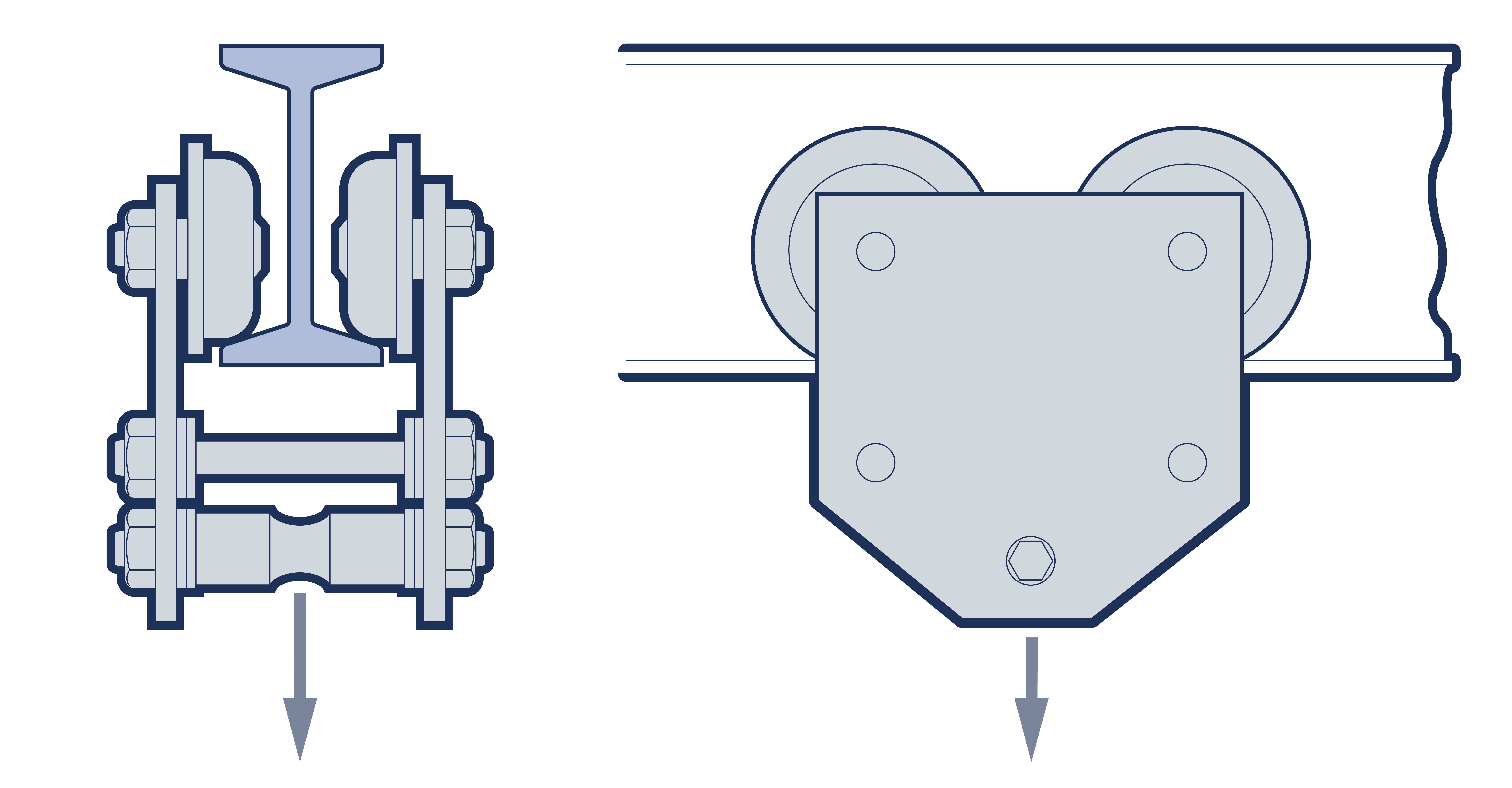
Figure 8.11-1 A girder trolley is intended for "in line" use only
When two or more trolleys are used for one lift, care should be taken to ensure that no one trolley will be subjected to a load greater than its own rated capacity. (See section 1.9.2 Other Requirements (6))
Trolleys should not be left in a position where they are liable to be subjected to extremes of temperature.
At no time should the operative permit either himself or other personnel to be beneath the suspended load.